
Discover a business plan template for Australian businesses, covering key sections to help you outline goals, strategies, and financial projections.
Is a business plan really necessary? Even the most promising business ideas can struggle without a clear, structured strategy to make them work.
A business plan helps you outline how to develop, execute, and grow your business, keeping you focused and organised.
If you’re looking to attract investors or secure financing, having a solid plan is essential as it shows you’re prepared and have a realistic path to success.
In this blog, we offer a practical and downloadable business plan template specifically for Australian businesses.
Ready to build a business plan that works for you? Let’s dive into the details.
A business plan is not just a scribble on paper with a bit of information about your business.
If you learn how to use it smartly, it becomes a strategic tool that offers multiple benefits:
A business plan clarifies your business’s objectives, helping you stay on course by setting measurable goals. For example, if your objective is to open five branches within five years, your business plan will detail the steps needed to achieve this.
✔️ Do: Be specific with your objectives (e.g., "Increase sales by 20% in the next quarter").
❌ Don’t: Set vague goals like "be more successful" without defining what that means.
Investors and banks want to see a clear, realistic plan before they provide financial support.
A detailed business plan shows them you’ve thoroughly researched your business idea, market, and financial projections.
For example, if you run a coffee shop, your business plan should include costs for equipment, rent, staffing, and an analysis of foot traffic in your chosen location.
✔️ Do: Include financial forecasts such as cash flow projections, profit and loss statements, and a break-even analysis.
❌ Don’t: Inflate your numbers to impress investors — be realistic and transparent.
Every business faces risks. A business plan helps identify potential challenges and outlines strategies to manage them.
For instance, if you’re opening an online store, you may need to address cybersecurity threats and solutions.
✔️ Do: Include contingency plans for potential setbacks like supply chain delays or economic downturns.
❌ Don’t: Assume everything will go smoothly, so plan for the unexpected.
A business plan is a benchmark for tracking progress. It allows you to see what’s working and what isn’t and make necessary adjustments.
If your goal was to gain 1,000 customers in the first year, reviewing your plan can help you assess whether you met the target and what strategies led to success.
✔️ Do: Regularly review and update your business plan as your business grows.
❌ Don’t: Treat it as a one-time document; it should evolve with your business.
A comprehensive business plan covers all the essential aspects of your business. Here’s a breakdown:
This is the first section, but it should be written last as it summarises the entire business plan. Include:
For example: “ABC Café aims to be the leading coffee shop in Melbourne’s CBD, offering organic, sustainably sourced coffee.”
✔️ Do: Keep it concise and engaging; this is your elevator pitch.
❌ Don’t: Overload it with details. Save specifics for later sections.
This section explains your business in detail:
If you run an eco-friendly cosmetics brand, describe how you cater to the growing demand for sustainable beauty products among environmentally-conscious consumers.
✔️ Do: Be clear about your value proposition and target market.
❌ Don’t: Generalise—show you know your niche and audience well.
Understanding your market is crucial for success. This section should include:
Let’s say you’re a tech startup targeting small businesses. Detail how competitors are positioned and what you’ll do differently, such as offering a more affordable software solution.
✔️ Do: Use statistics and data to support your analysis.
❌ Don’t: Make unsupported claims; back up your points with research.
Investors look closely at who runs the business. Include:
For example: “Our CEO has 10 years of experience in retail management, while our CMO has led marketing campaigns for top Australian brands.”
✔️ Do: Highlight the expertise and skills of your team members.
❌ Don’t: Leave gaps but explain how each role contributes to your business’s success.
This section describes what you offer and how it benefits customers:
If you’re offering a new app for managing invoices, highlight how it saves time and reduces errors for small business owners.
✔️ Do: Focus on the value your products bring to customers.
❌ Don’t: Overemphasise features without explaining the benefits.
Outline how you plan to attract and retain customers:
For instance: “Our online clothing store will use influencer marketing and social media campaigns to reach our target demographic of 18-30-year-olds.”
✔️ Do: Detail how you’ll reach your target audience.
❌ Don’t: Rely on generic strategies like “use social media” without specifics.
A vital section for securing funding. Include:
Provide a three-year forecast showing expected revenue growth, operating costs, and profitability milestones.
✔️ Do: Be realistic with your financial projections.
❌ Don’t: Overestimate revenue or underestimate costs.
Outline the specific licences, permits, and regulatory requirements your business must comply with in Australia.
✔️ Do:
❌ Don’t:
Highlight any sustainable practices or corporate social responsibility (CSR) initiatives. This can enhance your business’s appeal, particularly in a market like Australia, where sustainability is valued.
✔️ Do:
❌ Don’t:
Use this section to add supporting documents like:
If your business features innovative products, services, or practices, protecting your proprietary information is essential when sharing your business plan. Confidentiality is crucial, especially when dealing with investors, partners, or other stakeholders who may have access to sensitive details. Here's how you can safeguard your ideas:
Before you share your business plan with potential investors, partners, or advisors, ask them to sign a non-disclosure agreement (NDA).
An NDA legally binds the recipient to keep the information private, ensuring that your business ideas, strategies, or product designs remain secure.
This step is especially important if your business relies on unique processes, innovative technology, or other trade secrets that give you a competitive advantage.
Alongside an NDA, it’s wise to add a confidentiality statement within the business plan itself.
A simple disclaimer at the beginning or end of your plan can remind readers of the confidential nature of the information they are reviewing. It might read something like:
“The information contained in this business plan is confidential and proprietary.
It is intended solely for the use of the individual or entity to whom it is presented.
Any unauthorised disclosure, distribution, or reproduction of this document or its contents is prohibited.”
This additional precaution reinforces the expectation of privacy and limits the risk of details being disclosed or shared without your consent.
If your business plan contains particularly sensitive information, such as innovative product designs or proprietary business models, clearly mark these sections as “Confidential.” Highlighting these parts of the document alerts readers to exercise extra caution when reviewing and handling that information.
Make sure your plan is appropriate for its audience. If it’s for investors, focus on growth potential and financials.
For internal use, focus more on operational details and team management.
✔️ Do: Adjust the content based on who will read the plan.
❌ Don’t: Use the same plan for all purposes, customise to show attention to detail.
Incorporate statistics, research findings, and evidence to support your strategies and projections.
✔️ Do: Use Australian-specific, up-to-date data to make your plan relevant.
❌ Don’t: Generalise without backing up claims with facts.
Avoid technical jargon unless necessary. Instead, focus on paraphrasing complex text and concepts. The clearer your plan, the easier it is for investors and team members to understand.
✔️ Do: Make the language accessible.
❌ Don’t: Overcomplicate the text – simplicity is key.
ANNA is designed to be your all-in-one partner for starting, running, and growing a successful business in Australia:
Getting your business off the ground is easier than ever with ANNA One, a service that guides you through the entire company registration process.
Whether you need an Australian Business Number (ABN) or an Australian Company Number (ACN), ANNA provides a seamless experience:
⚡ Register your business in just a few steps, with ASIC documents delivered directly to your inbox. ANNA covers the registration fee, making the process not only simple but also cost-effective.
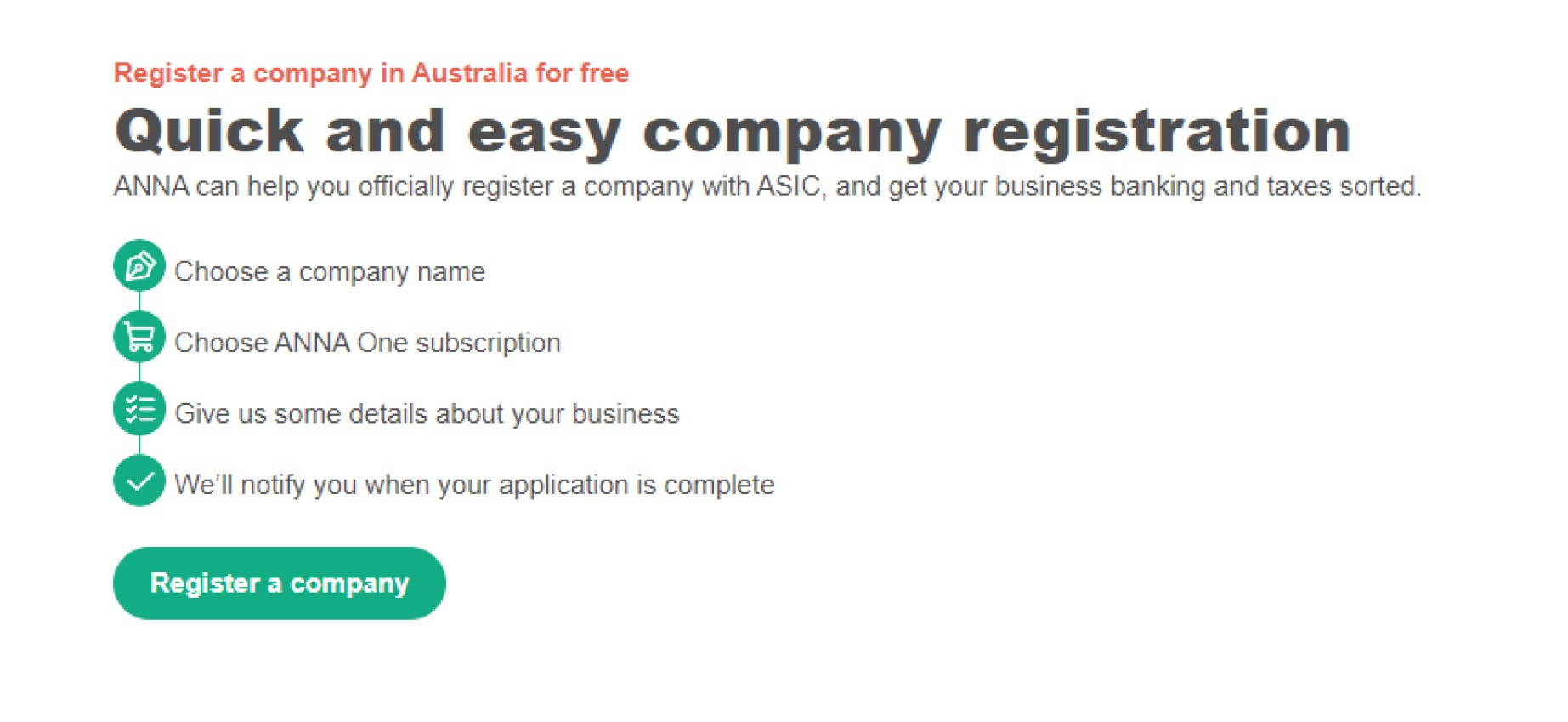
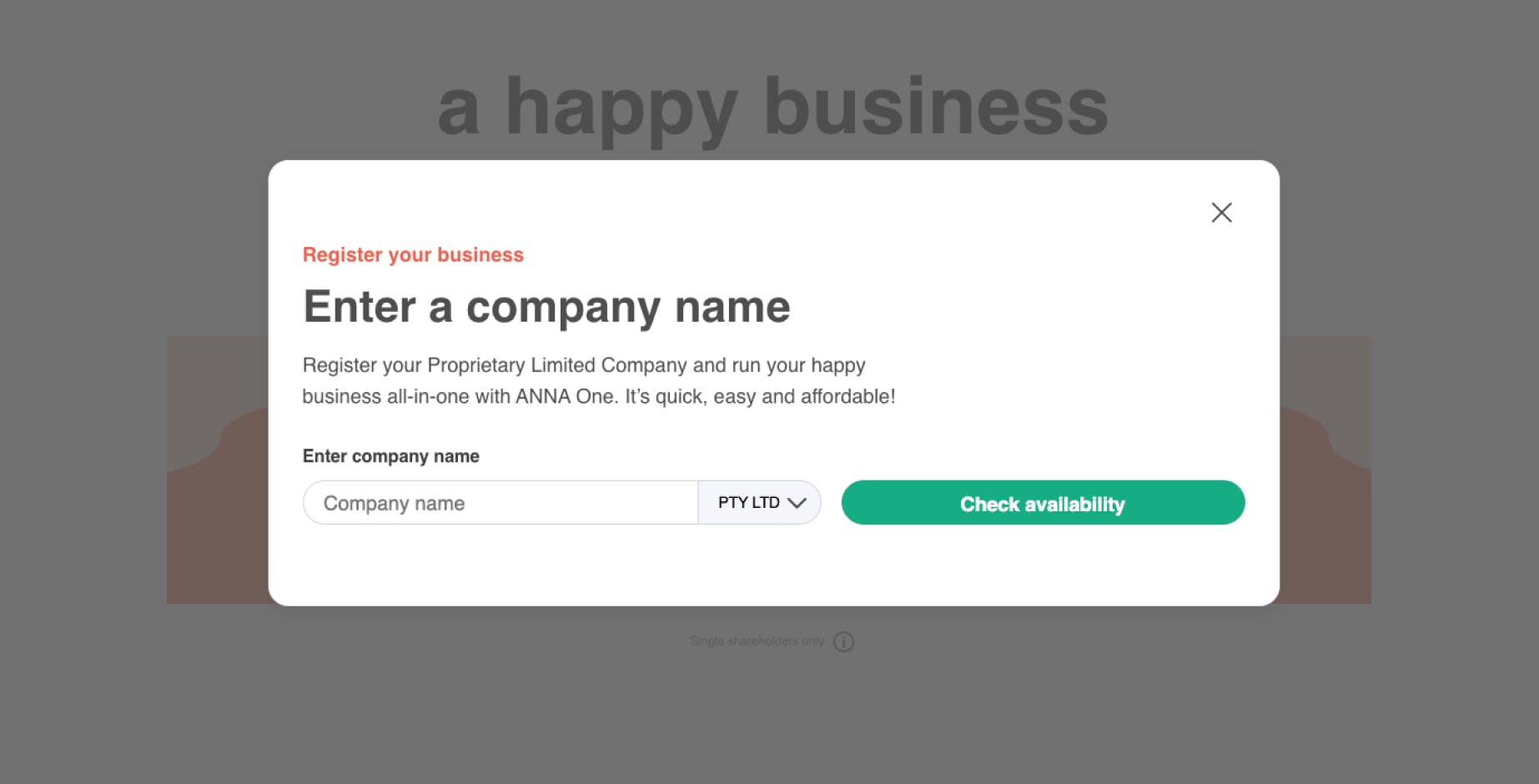
⚡ ANNA helps you register a business name, ensuring your brand is legally protected and recognisable across Australia.
One of the biggest challenges for any business owner is keeping track of finances, taxes, and compliance deadlines:
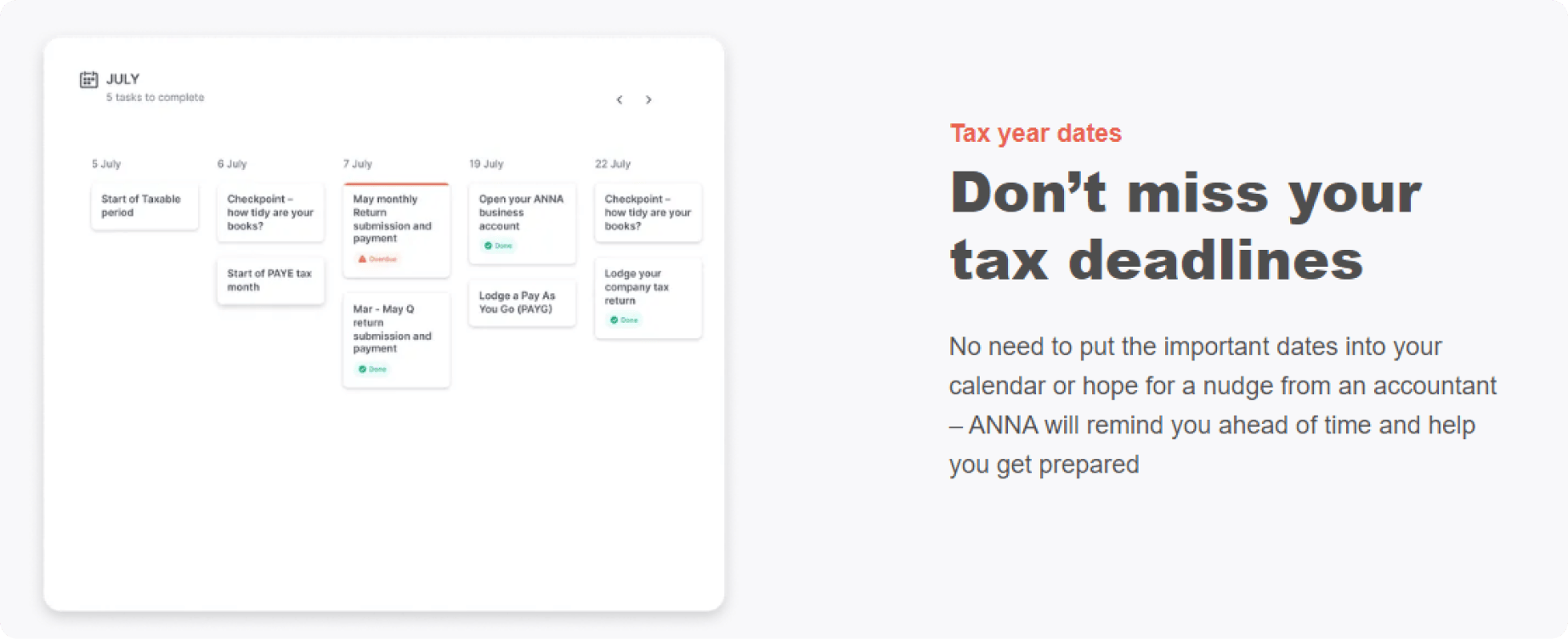
⚡ ANNA calculates your GST automatically and even provides tax reminders, so you never miss a deadline. No more scrambling at the last minute to get your financial records in order; ANNA ensures you’re always prepared.
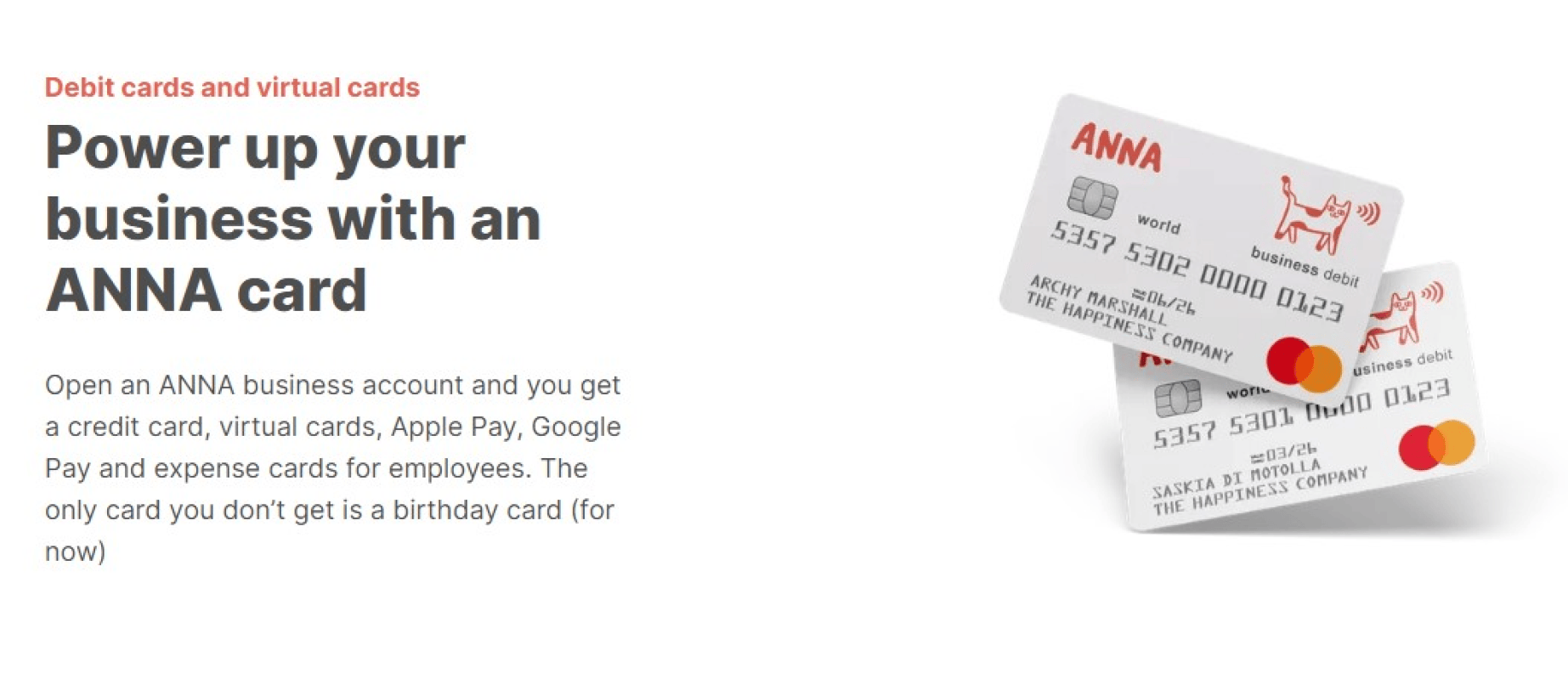
⚡ An all-in-one business account comes with a credit card, virtual cards, and the ability to manage expenses seamlessly. Connect your other bank accounts to see all your finances in one place, making tracking and managing your cash flow easy.
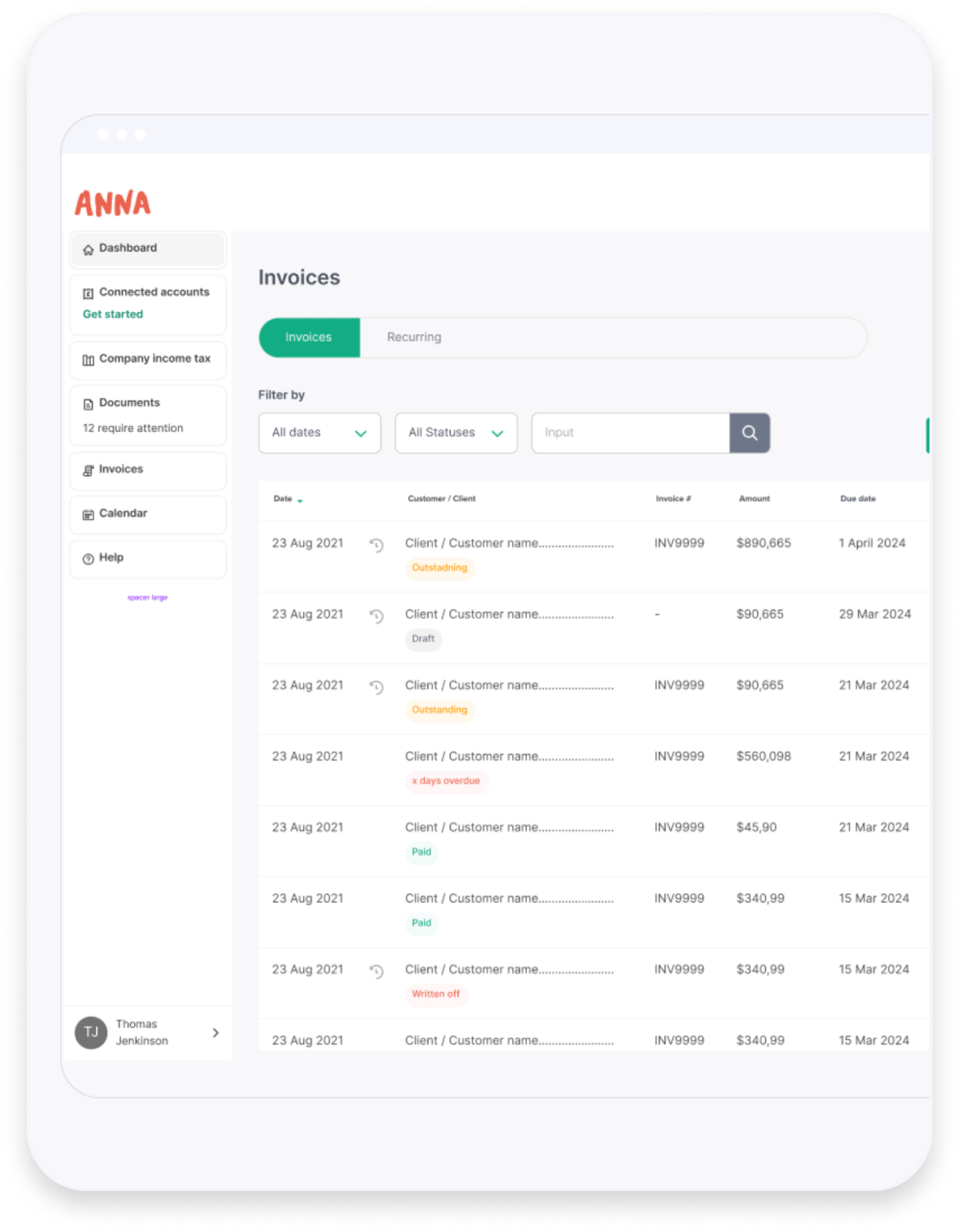
⚡ Create and send professional invoices quickly. If invoices aren’t paid on time, ANNA’s system follows up for you, ensuring that 80% of invoices are paid within a week!
In today’s market, sustainability and corporate responsibility aren’t just buzzwords – they’re essential for building trust and attracting customers:
⚡ ANNA helps you keep track of business expenses and automatically categorise them, allowing you to optimise your tax bill. You can align your business practices with sustainability goals by reducing waste and managing expenses efficiently.
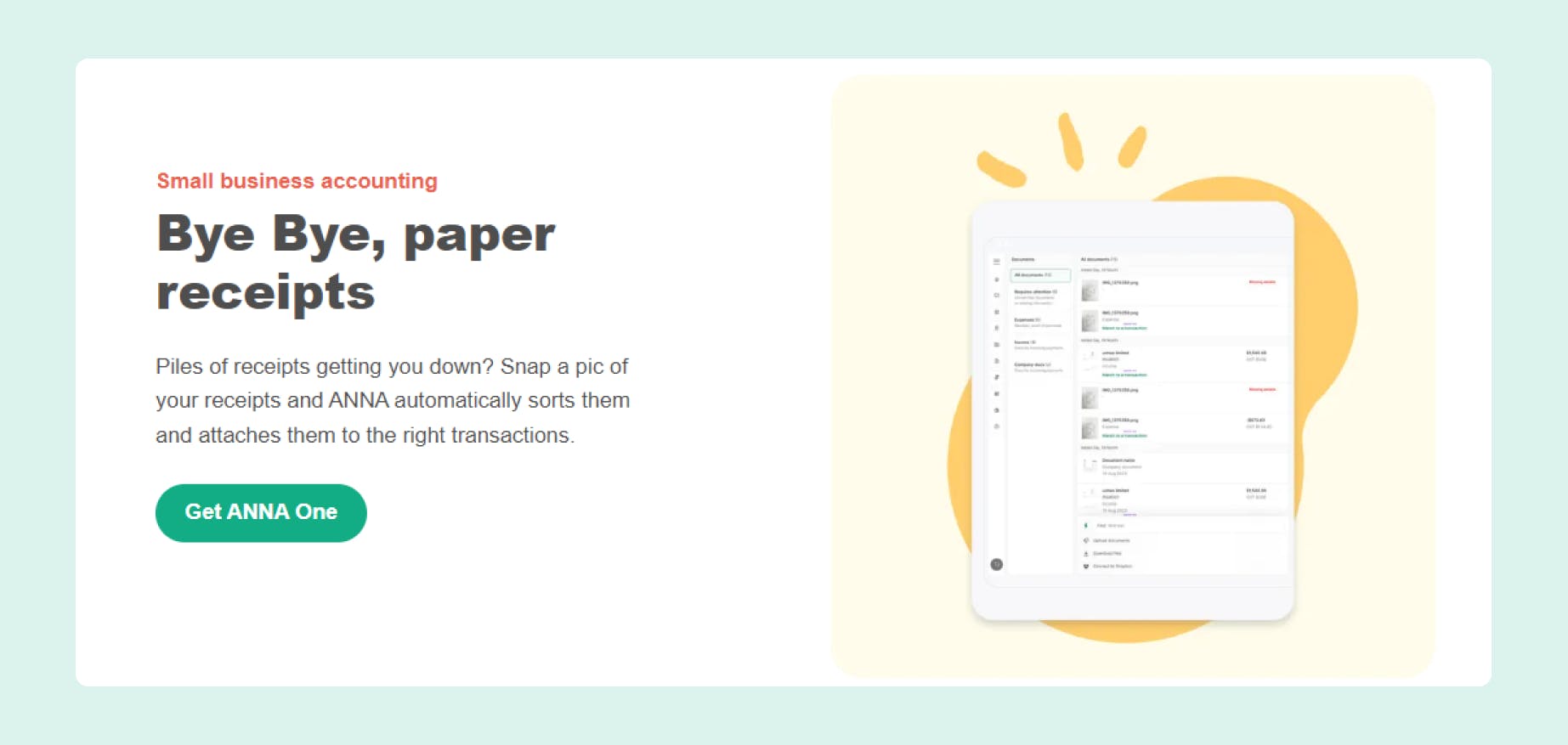
⚡ Say goodbye to paper receipts and invoices. ANNA’s digital solutions ensure that all your financial documents are managed electronically, reducing paper usage and contributing to an eco-friendly business environment.
When you’re managing a business, access to the right support can make all the difference. ANNA offers a range of support options to ensure your business runs smoothly:
⚡ A team of friendly accountants is available to help with any tax or bookkeeping questions you might have. Whether it’s your first year in business or you’re dealing with complex tax requirements, ANNA ensures you have the support you need.
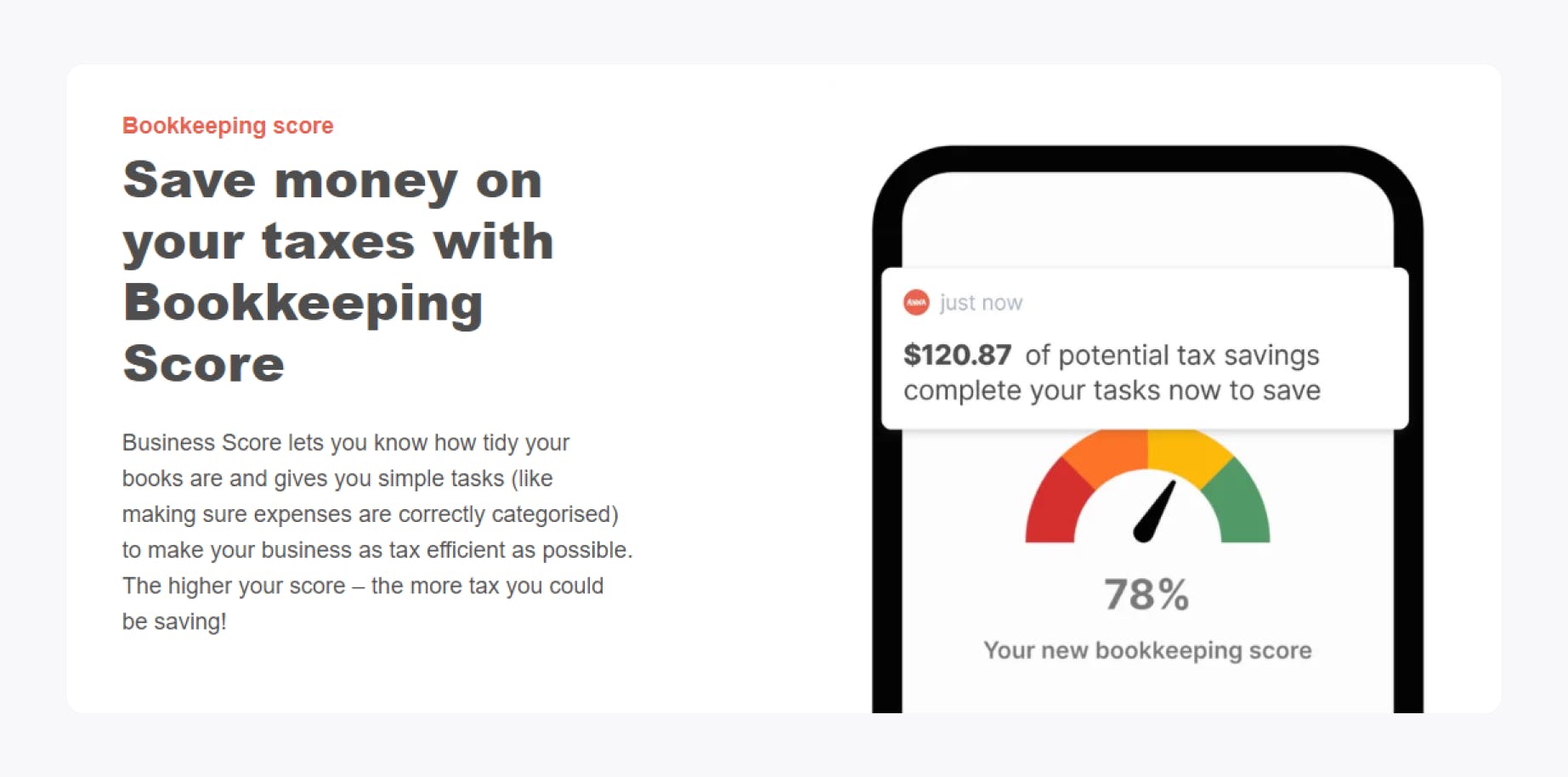
⚡ Take advantage of the Bookkeeping Score tool, which evaluates how well you’re managing your finances and suggests simple tasks to help improve efficiency and save on taxes.
Ready to take the next step?Sign up today and discover how we can help you turn your business idea into reality!
Open a business account with ANNA and start sending and accepting payments today
Open a business account
.svg)